
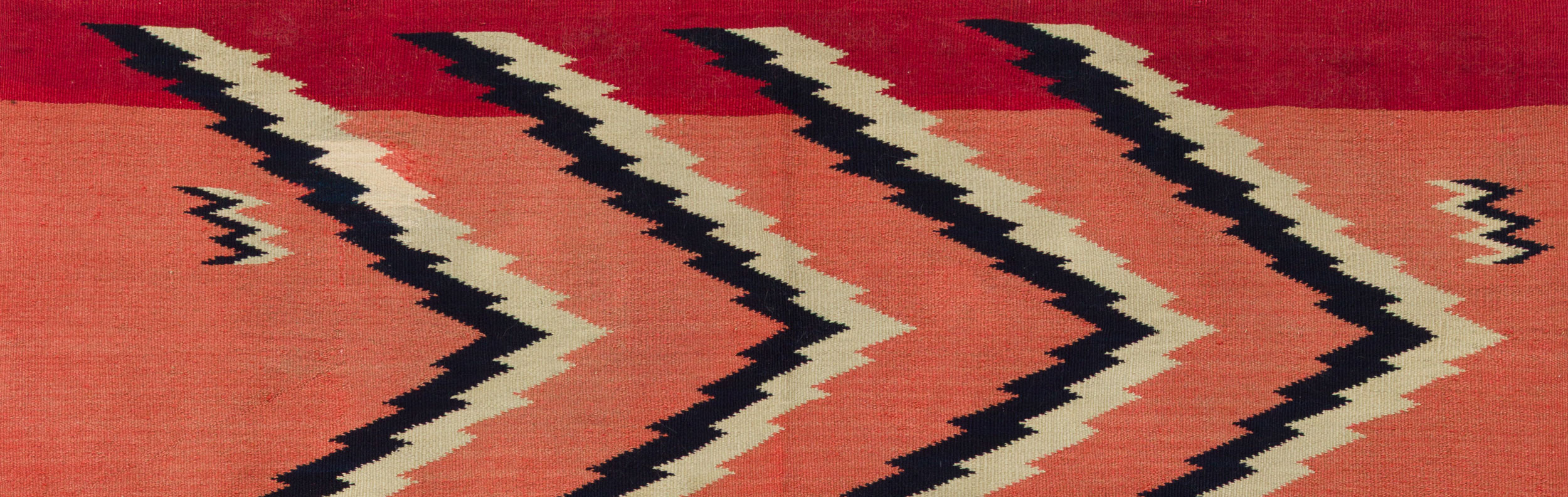
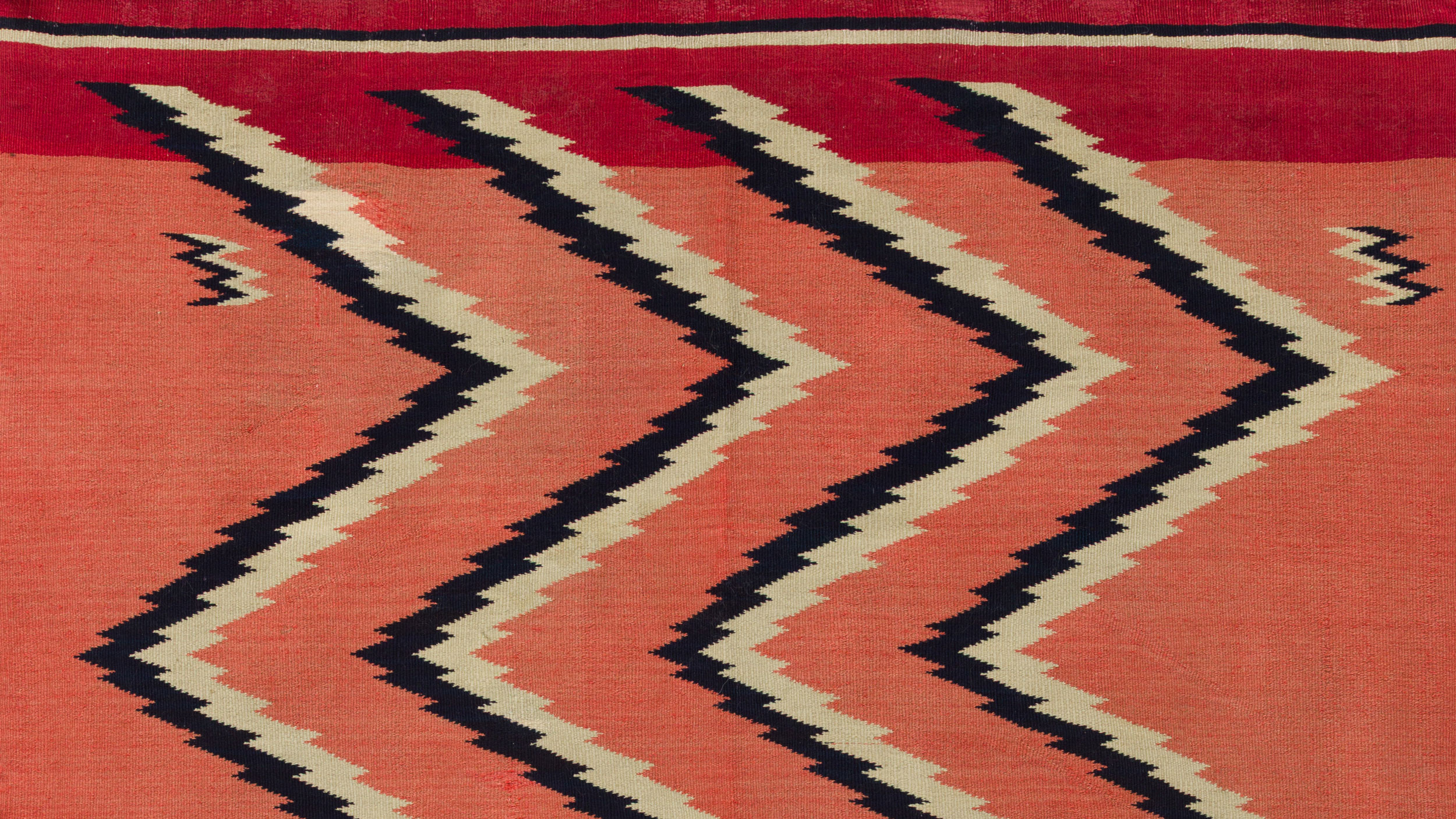
Navajo Blankets from the Collection of Tony Berlant
L.A. Louver presents a selection of blankets by Navajo (Diné) weavers from the collection of artist Tony Berlant. Dating from approximately 1870 to 1885, these textiles were woven primarily from handspun wool, colored using a mix of natural and synthetic dyes. These blankets are from what is considered the "Transition period" in Navajo weaving, when increased associations between the Navajo and Euro-American settlers through trading posts and the railroad facilitated access to a wider variety of dyes, commercial yarns, and other textile influences. These textiles were likely made by women, although both men and women in the Navajo community now practice the art form.
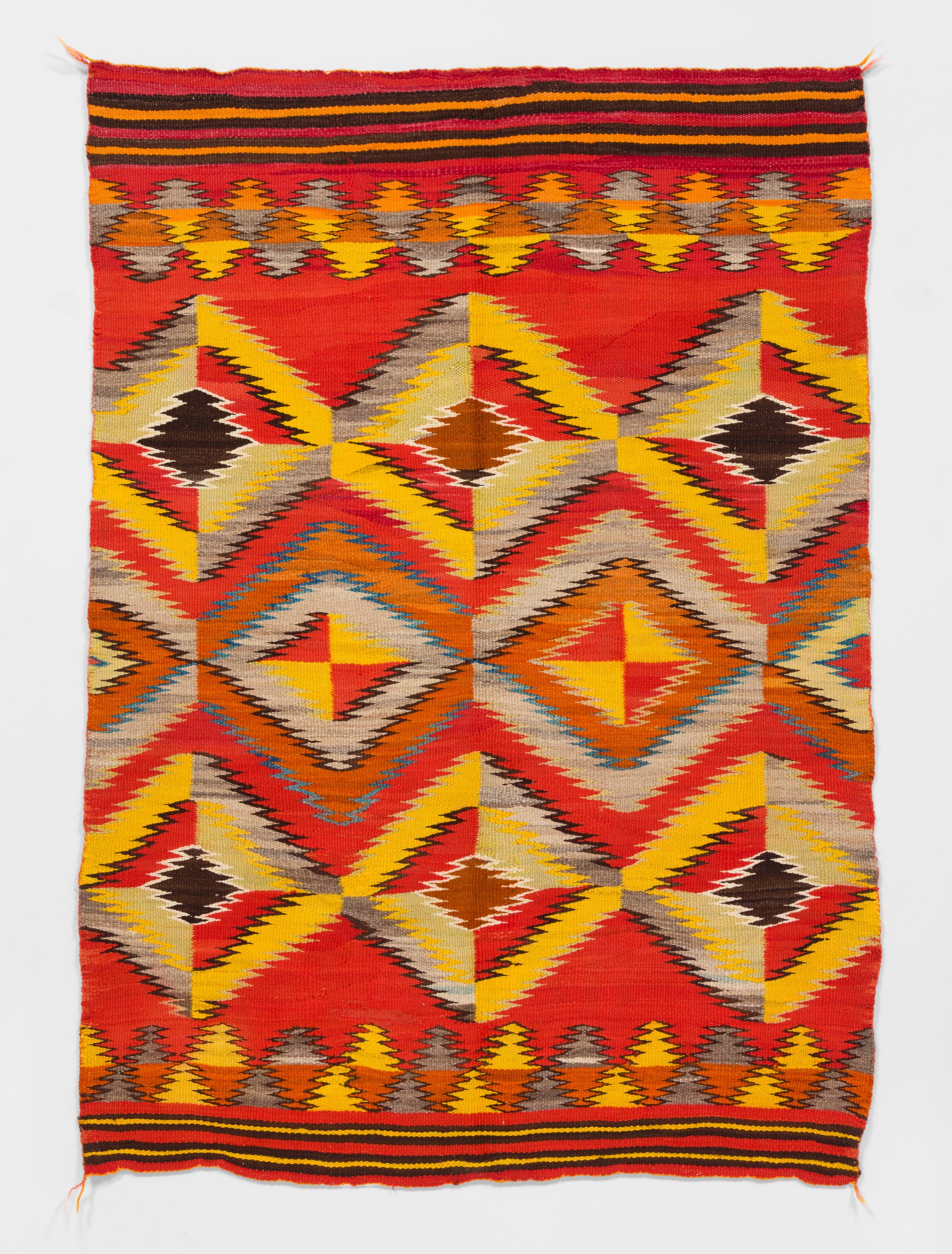
Unknown (Navajo)
Navajo Eye Dazzler Blanket, circa 1885
All handspun native wool; the brown and white are natural; the red, yellow, orange, blue, and gray are synthetic dyed
78 x 54 3/4 in. (198.1 x 139.1 cm)
(UNav26-003)
$16,000
Inquire
Blankets from this period are renowned for their experimental patterns in bright colors, including the well-known "eye dazzler" styles. Navajo Eye Dazzler Blanket (c.1885, UNav26-003 , pictured above), for example, features handspun wool colored with synthetic dye to achieve bold red, yellow, orange, and blue. These vivid colors are woven in diamond shapes alongside undyed wool, which retains its natural white or beige color. The blankets also provide insight into the ways that they were created. Navajo Wedge-weave Eye-dazzler (c. 1880, UNav26-001, pictured below) features interlocking zigzag lines created via a technique known as wedge weave, wherein the weaver moves weft thread diagonally through the vertical warp threads instead of in the traditional horizontal manner. This results not only in the dramatic linearity of the blanket, but also in its softly scalloped edges.
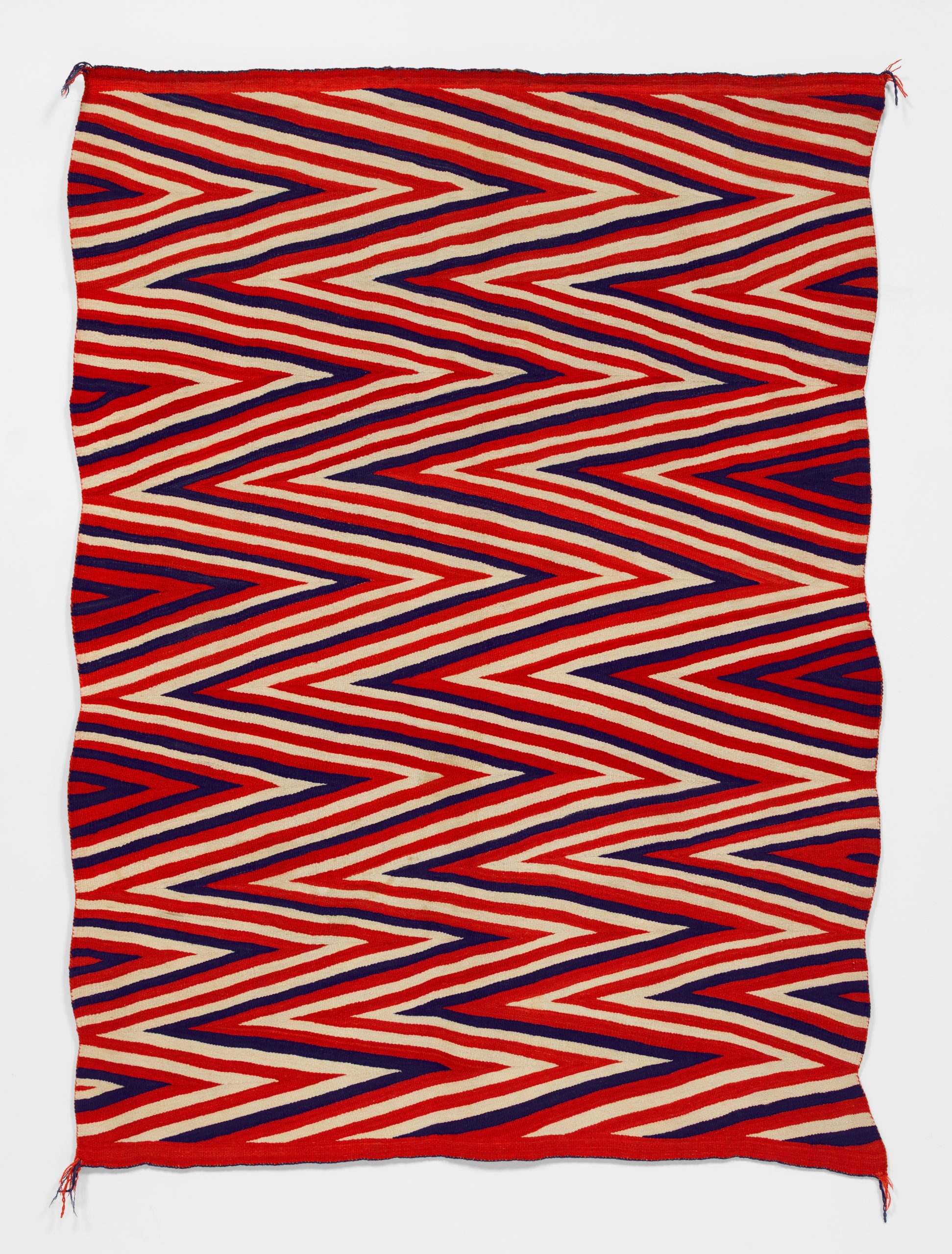
Unknown (Navajo)
Navajo Wedge-weave Eye-dazzler, circa 1880
Handspun native wool: white is un-dyed native handspun wool; the blue is native handspun dyed with indigo; and the red is aniline dyed native handspun wool
78 3/4 x 59 3/4 in. (200 x 152 cm)
(UNav26-001)
Price on request
Inquire
Berlant began collecting Navajo textiles as a young art instructor at UCLA in the late 1960s. In 1972, collaborating with Mary Hunt Kahlenberg, then curator of textiles at the Los Angeles County Museum of Art, Berlant organized a significant exhibition of Navajo blankets that traveled across the United States and Europe. Dr. Ann Lane Hedlund, Curator Emerita of Ethnology of the Arizona State Museum and specialist in Native American weaving, noted that Berlant and Kahlenberg’s exhibition was the first major show of historical Diné blankets to be shown at the Navajo Tribal Museum (now the Navajo Nation Museum) in Window Rock, Arizona. Hedlund recalls that many significant contemporary weavers and their relatives attended the exhibition while it was on view in the Navajo Nation’s capital.¹
As a dealer, Berlant also assisted numerous other artists with cultivating their own collections of Navajo textiles. Berlant describes:
“Shortly after [I began collecting Navajo weaving], New York sculptor Donald Judd visited me in Los Angeles. Judd was already familiar with Navajo blankets—the first person I had found who knew something about them. I had begun to collect blankets seriously, and I showed him my collection of perhaps seventy-five in all. Judd came back with painter Frank Stella, and I traded each of them a blanket for a work of theirs. Over lunch, partially in response to my complaints about teaching for a living, they convinced me to give up my UCLA job and concentrate on helping artists build blanket collections. I was easily convinced [...] The artists whom I helped collect blankets at this time included Andy Warhol, Jasper Johns, Robert Rauschenberg, Jules Olitski, Larry Poons, Sam Francis, Ed Moses, Ken Nolan, Brice Marden, David Novros, Tony Caro, Allen Jones, Tony Smith, Arman, Richard Diebenkorn, Jim Dine, Michael Heizer, and Roy Lichtenstein.”²
In addition to his work with Navajo blankets, Berlant has avidly collected and written on Mimbres pottery and paleolithic tools. In 1976, Berlant helped found the Mimbres Foundation, which was created to protect Mimbres sites and has produced significant research on the topic. Since 2002, Berlant has been a Research Affiliate at the Peabody Museum of Archaeology and Ethnology at Harvard University, a significant recognition of Berlant’s contributions to in the field. Several influential exhibitions and books have grown from Berlant’s collections and scholarship, including First Sculpture: Handaxe to Figure Stone at the Nasher Sculpture Center in Dallas, TX (2018) and Decoding Mimbres Painting: Ancient Ceramics of the American Southwest at LACMA (2018).
¹ Ann Lane Hedlund, “Introduction: Consultations, Collaborations, and Curation by Navajo Weavers: A Celebration and History,” in Navajo Textiles: The crane Collection at the Denver Museum of Nature and Science, ed. Laurie D. Webster, Louise I. Stiver, D.Y. Begay, and Lynda Teller Pete (University Press of Colorado, 2017), 5.
² Tony Berlant, “Foreword,” in Collecting the Weaver’s Art: The William Claflin Collection of Southwestern Textiles, ed. Laurie D. Webster (Peabody Museum Press and Harvard University, 2003), X-XI.
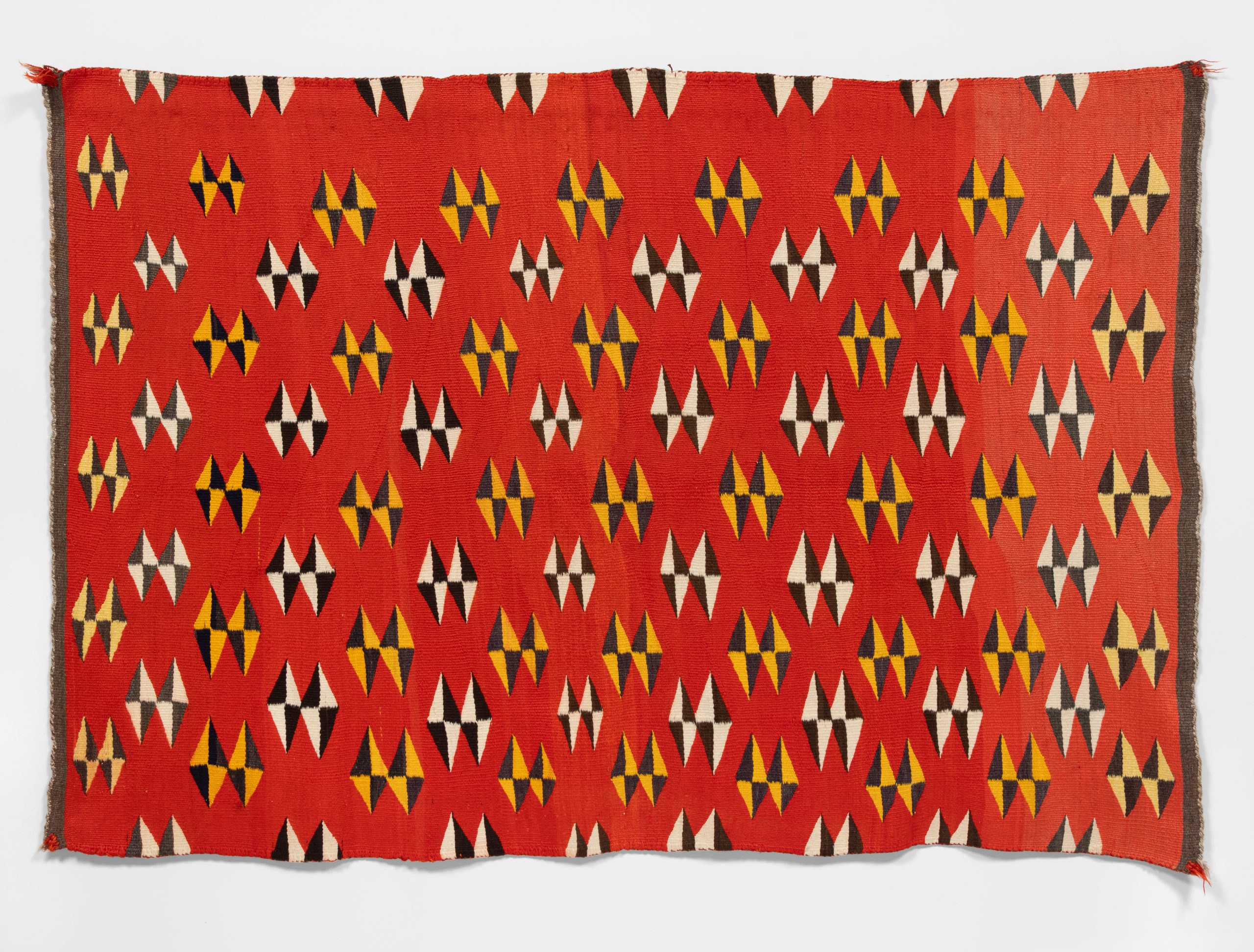
Unknown (Navajo)
Navajo Eye Dazzler Blanket, circa 1885
Brown and white are natural Red, yellow orange, blue and gray are synthetic dyed
78 x 54 3/4 in. (198.1 x 139.1 cm)
(UNav26-006)
$40,000
Inquire
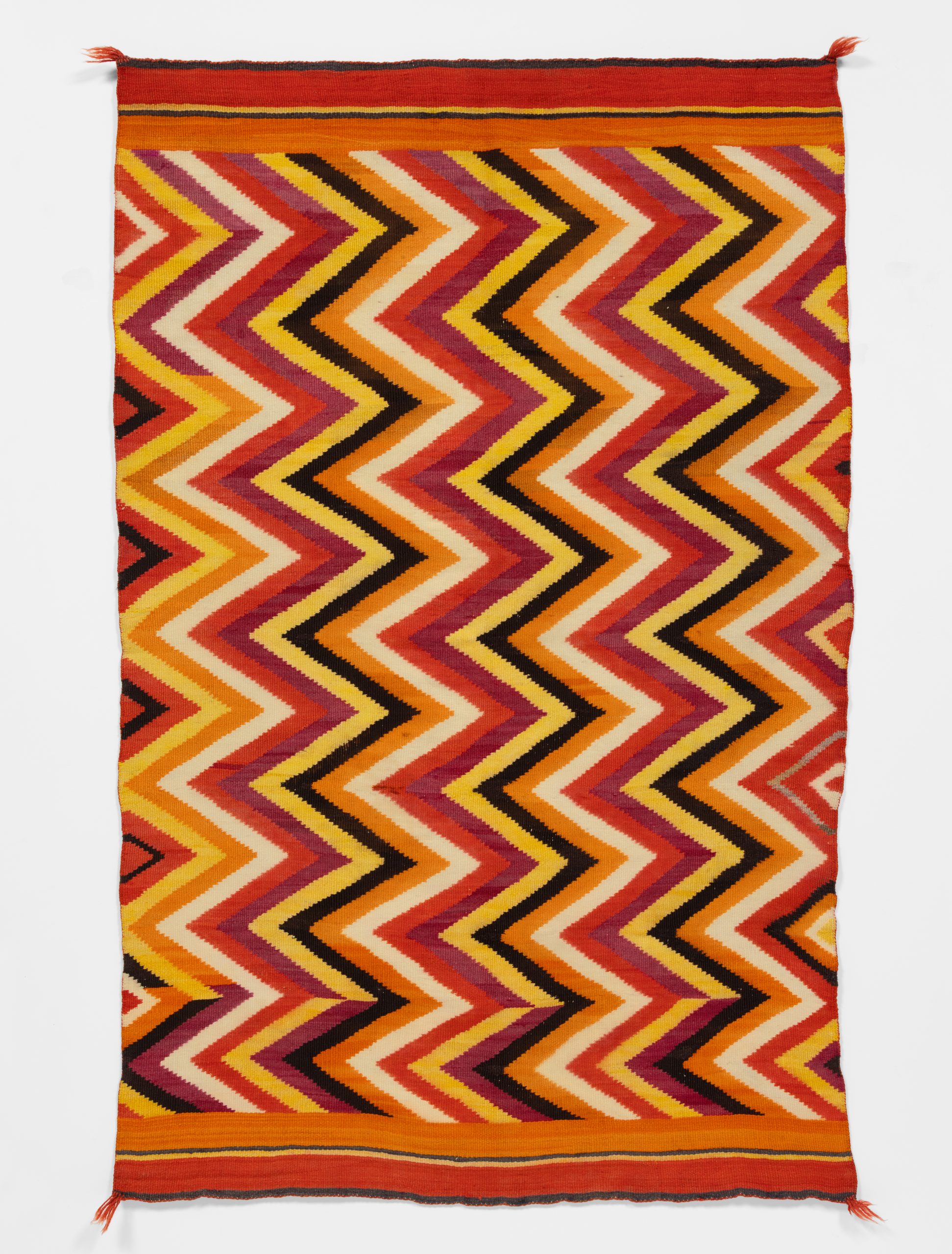
Unknown (Navajo)
Navajo Eccentric Eyedazzler, circa 1878
White is undyed native handspun wool, blue is native handspun dyed with Indigo, all other colors are native handspun dyed with Aniline
86 1/2 x 56 in. (219.7 x 142.2 cm)
(UNav26-004)
$18,000
Inquire
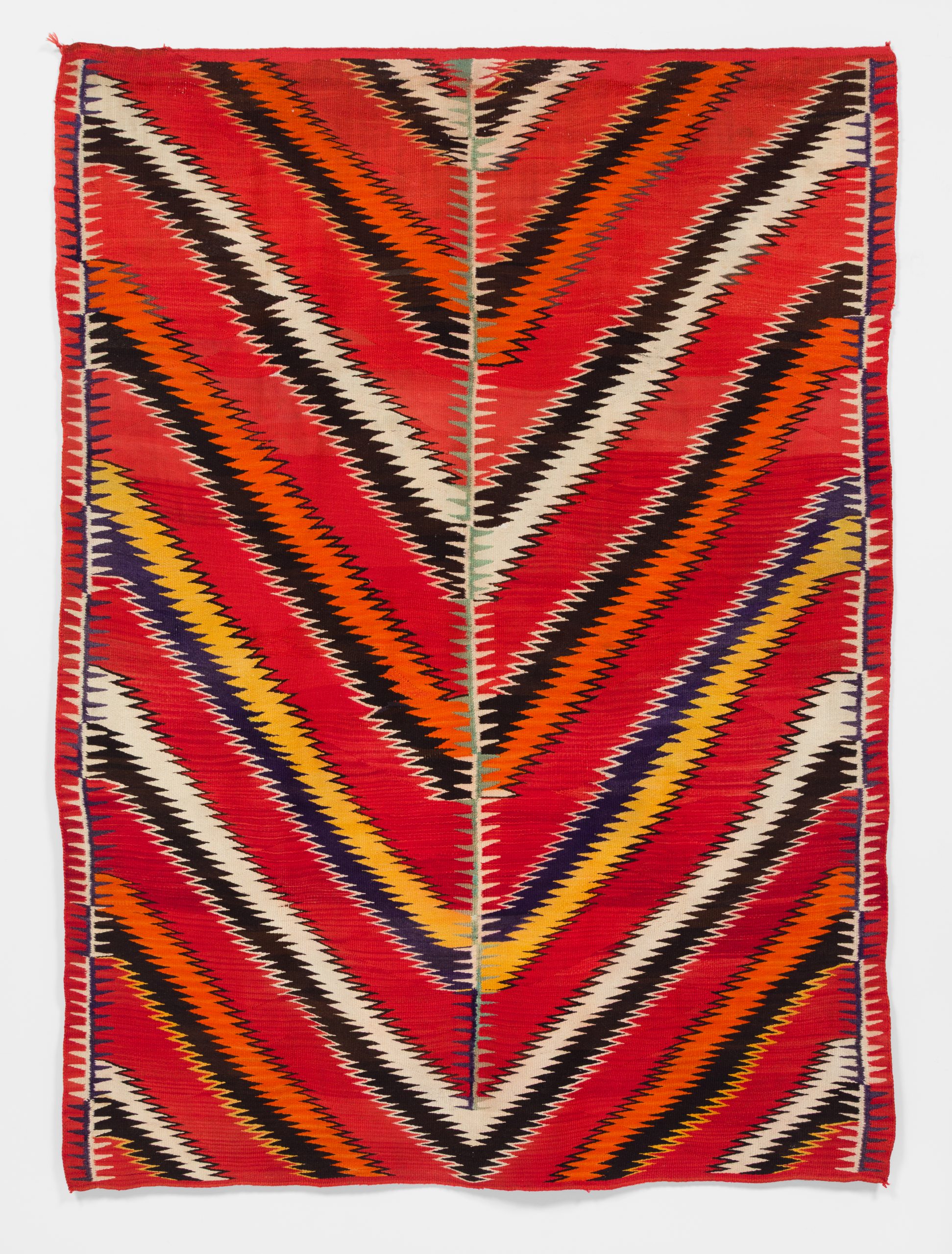
Unknown (Navajo)
Navajo Eye-dazzler, circa 1875-1885
Native handspun wool: red, orange, synthetic dyed
86 1/4 x 62 1/2 in. (219.1 x 158.8 cm)
(UNav26-005)
$18,000
Inquire
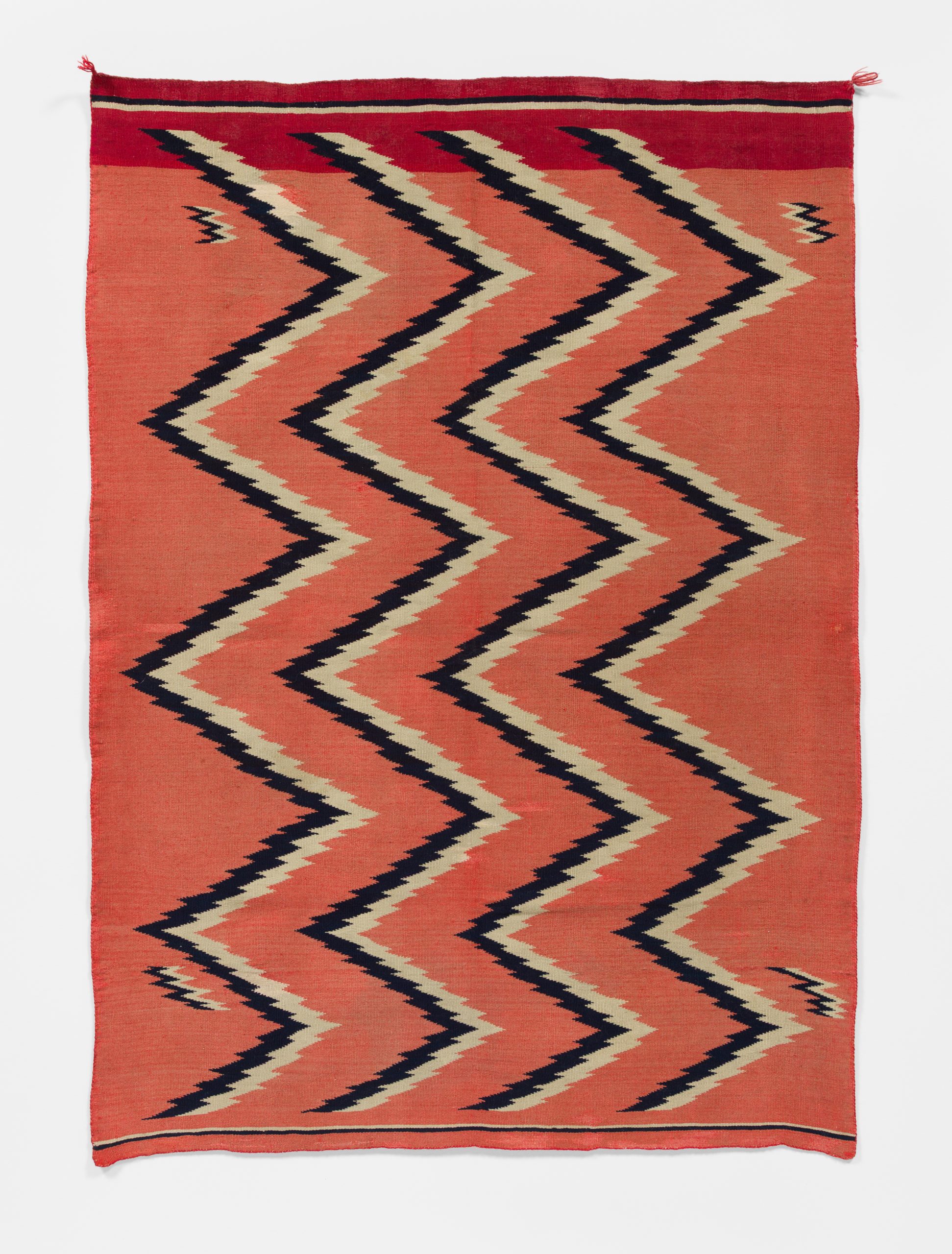
Unknown (Navajo)
Navajo Classic Serape, circa 1870
White is undyed native handspun; dark red is 3 ply yarn (Saxony) dyed with Cochineal; light red is raveled American flannel dyed with Aniline; blue is native handspun dyed with Indigo
71 x 50 1/2 in. (180.3 x 128.3 cm)
(UNav26-008)
$30,000
Inquire
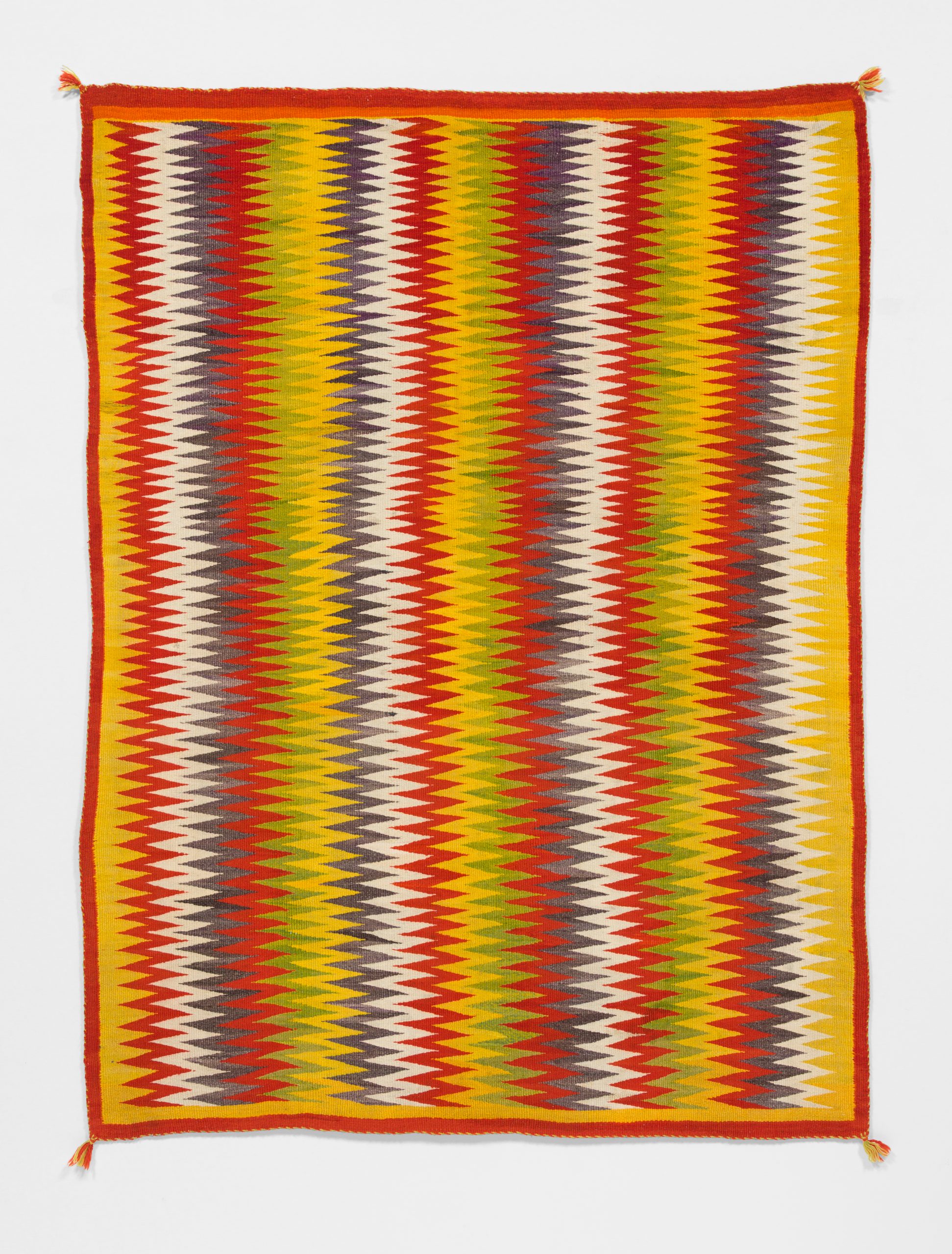
Unknown (Navajo)
Navajo Eye Dazzler Blanket, circa 1875 -1885
Handspun native wool; the gray and white are natural; the red, yellow, purple and green are synthetic dyed
75 x 57 in. (190.5 x 144.8 cm)
(UNav26-002)
Sold
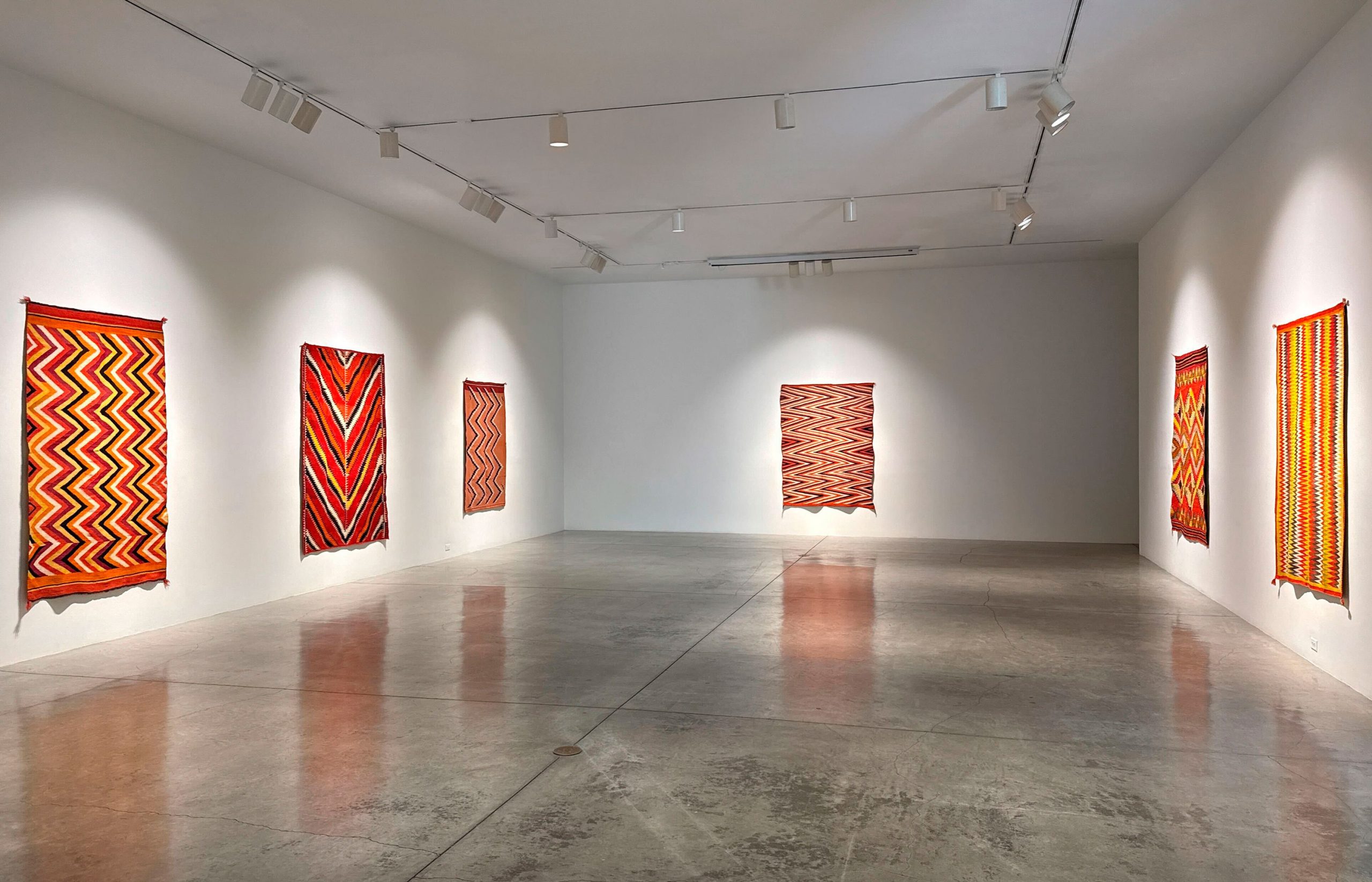
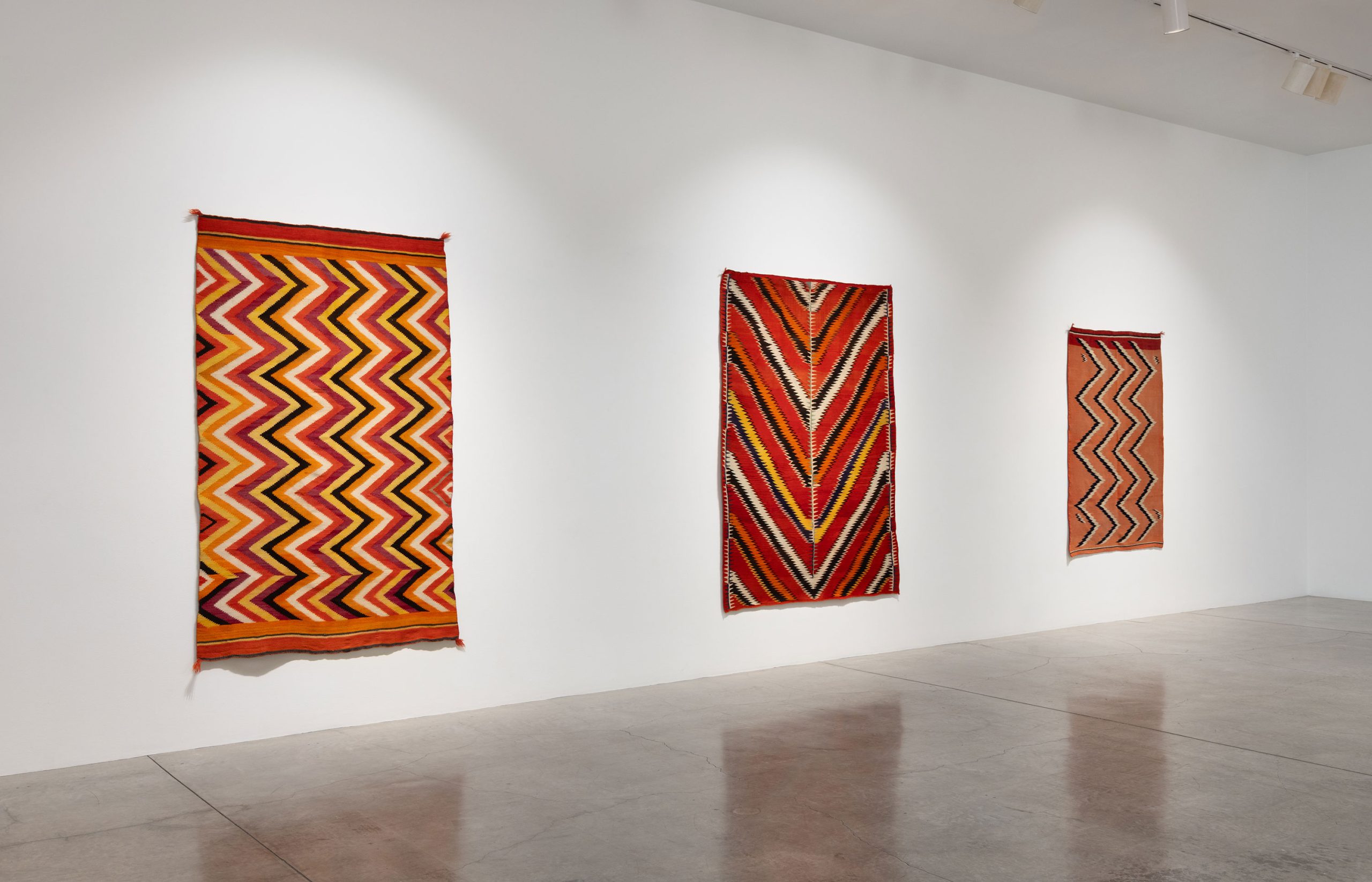
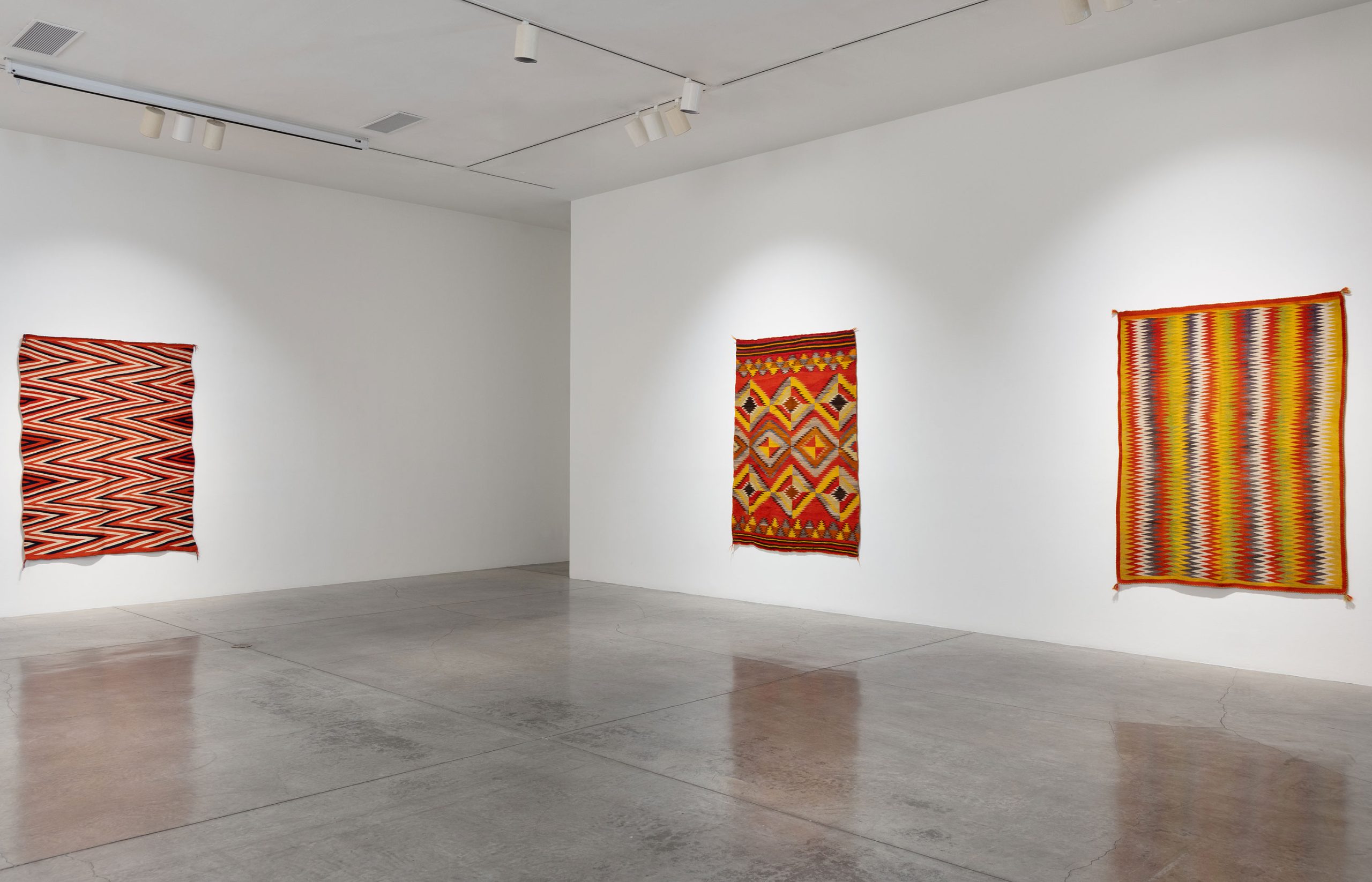
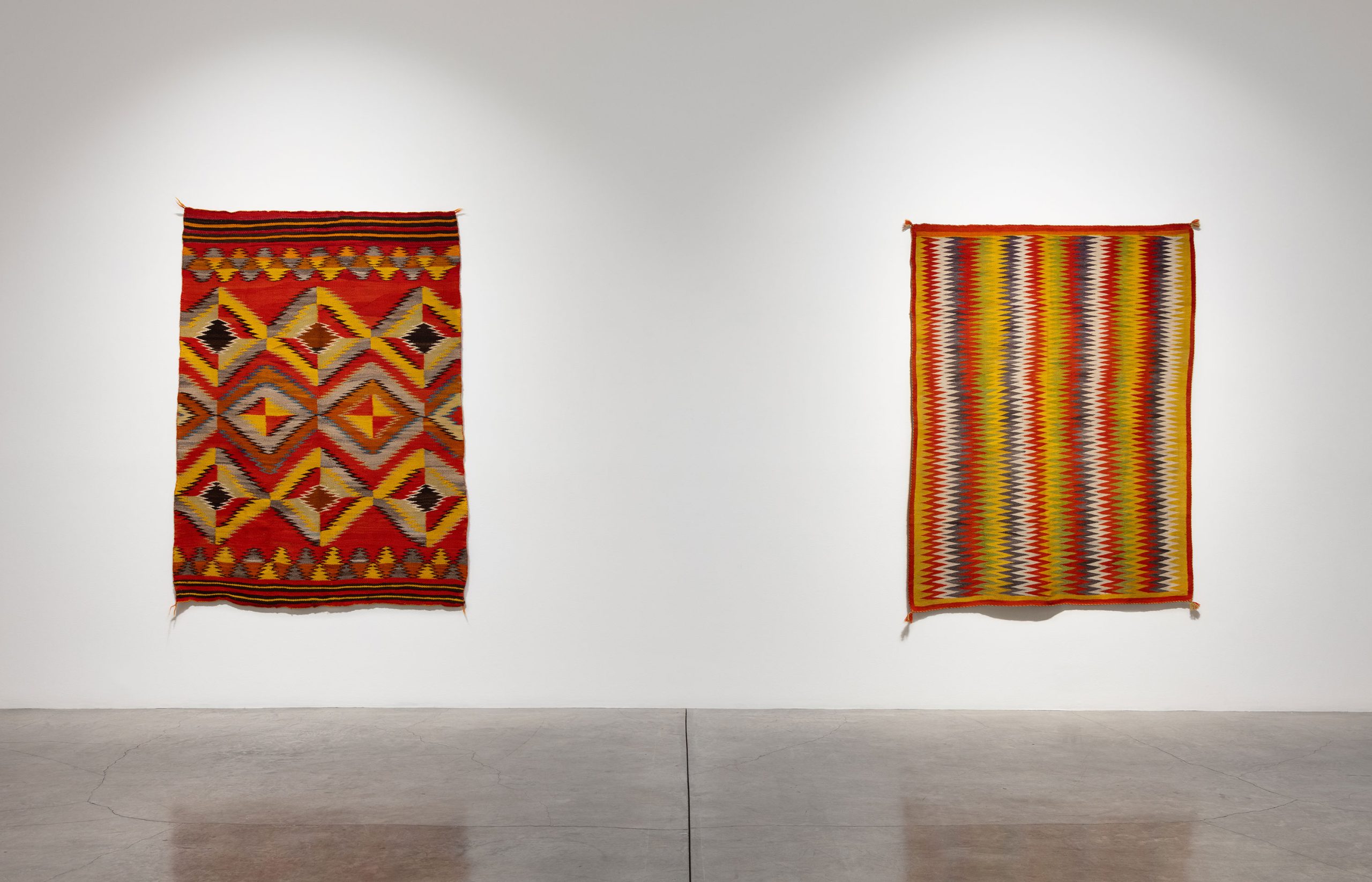
Installation photography, Navajo Blankets from the Collection of Tony Berlant
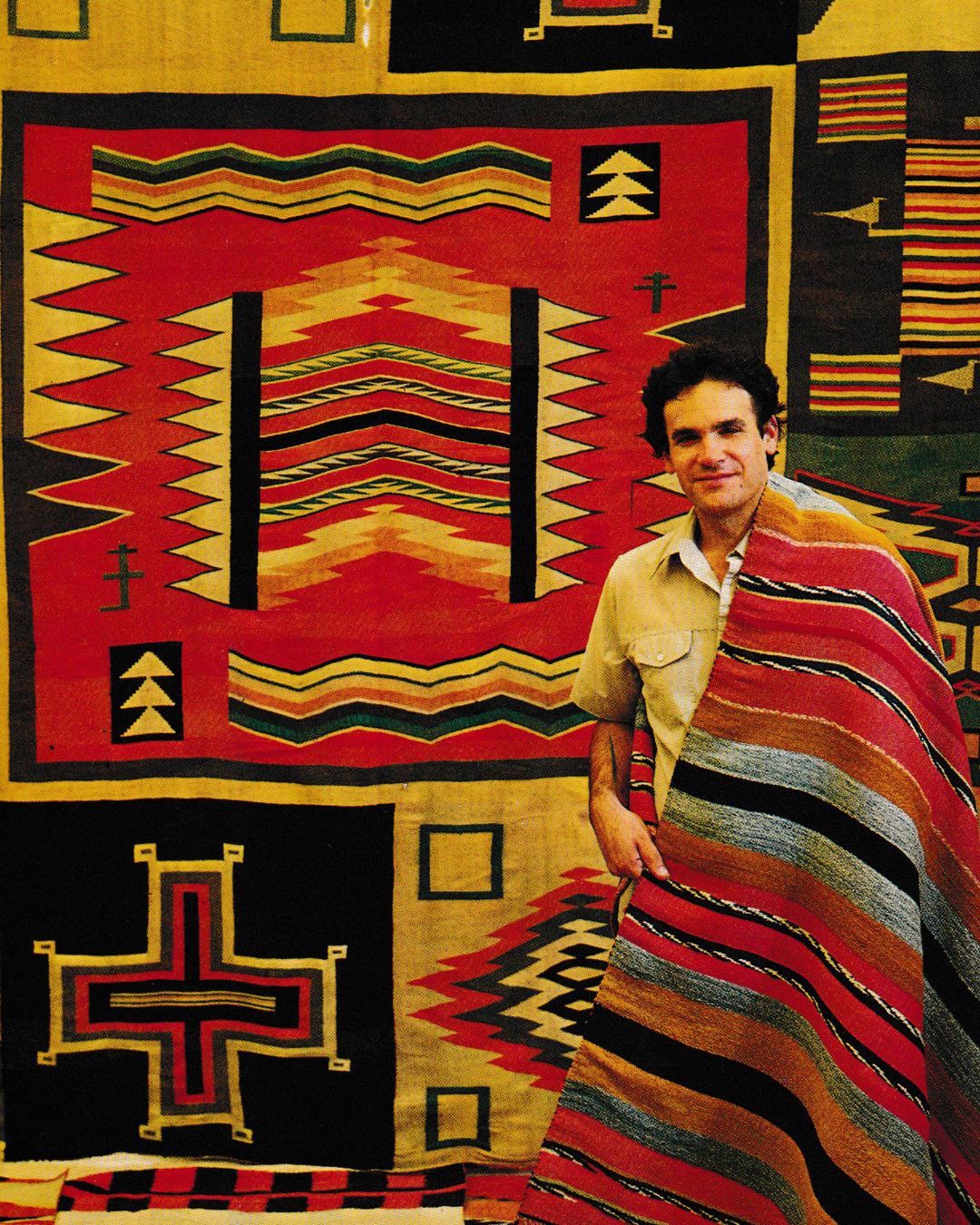
Tony Berlant with Navajo textiles from his collection, 1979, photo by Dan Budnik.
L.A. Louver is currently open by appointment only. Please call 310.822.4955 or email info@lalouver.com for appointemnts or inquiries. To receive the latest news about L.A. Louver, subscribe to our mailing list. Thank you!